
Upper Egypt
Nile cruise!

We took a flight on Egypt Air from Cairo to Luxor to get to Upper Egypt (the South). Upper Egypt was hot, it got up to 117 degrees while we were there! In the temple hieroglyphics, the symbols associated with Upper Egypt are the white crown, the vulture, and the lotus flower.
When a Pharaoh had a double crown it was symbolizing that they were uniting Upper and Lower Egypt. When there was a lotus flower and papyrus imagery, that is also symbolizing that the Pharaoh is the leader of Upper and Lower Egypt.
The temples were in good condition, with incredibly vibrant colors in many of the hieroglyphics.
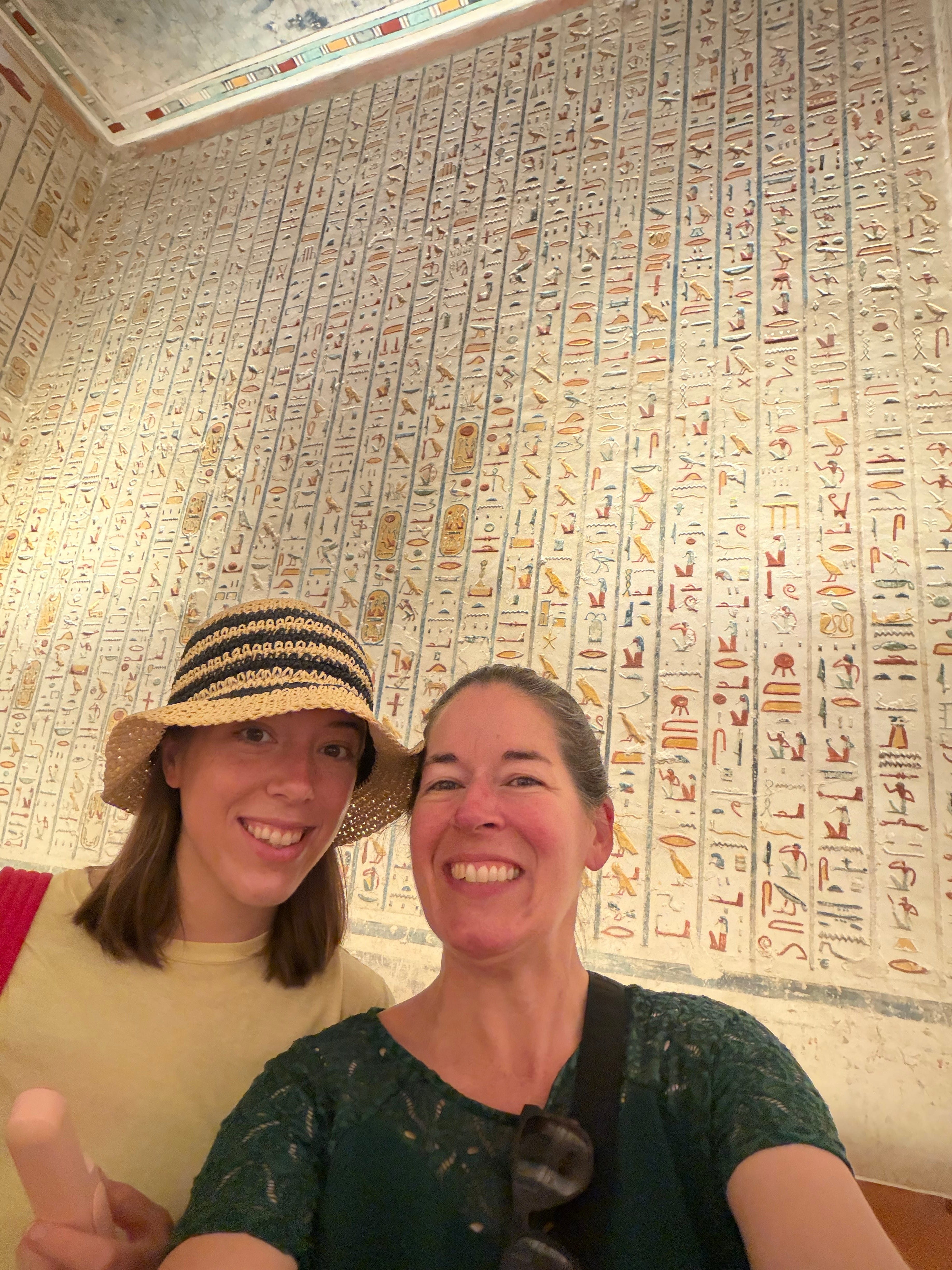
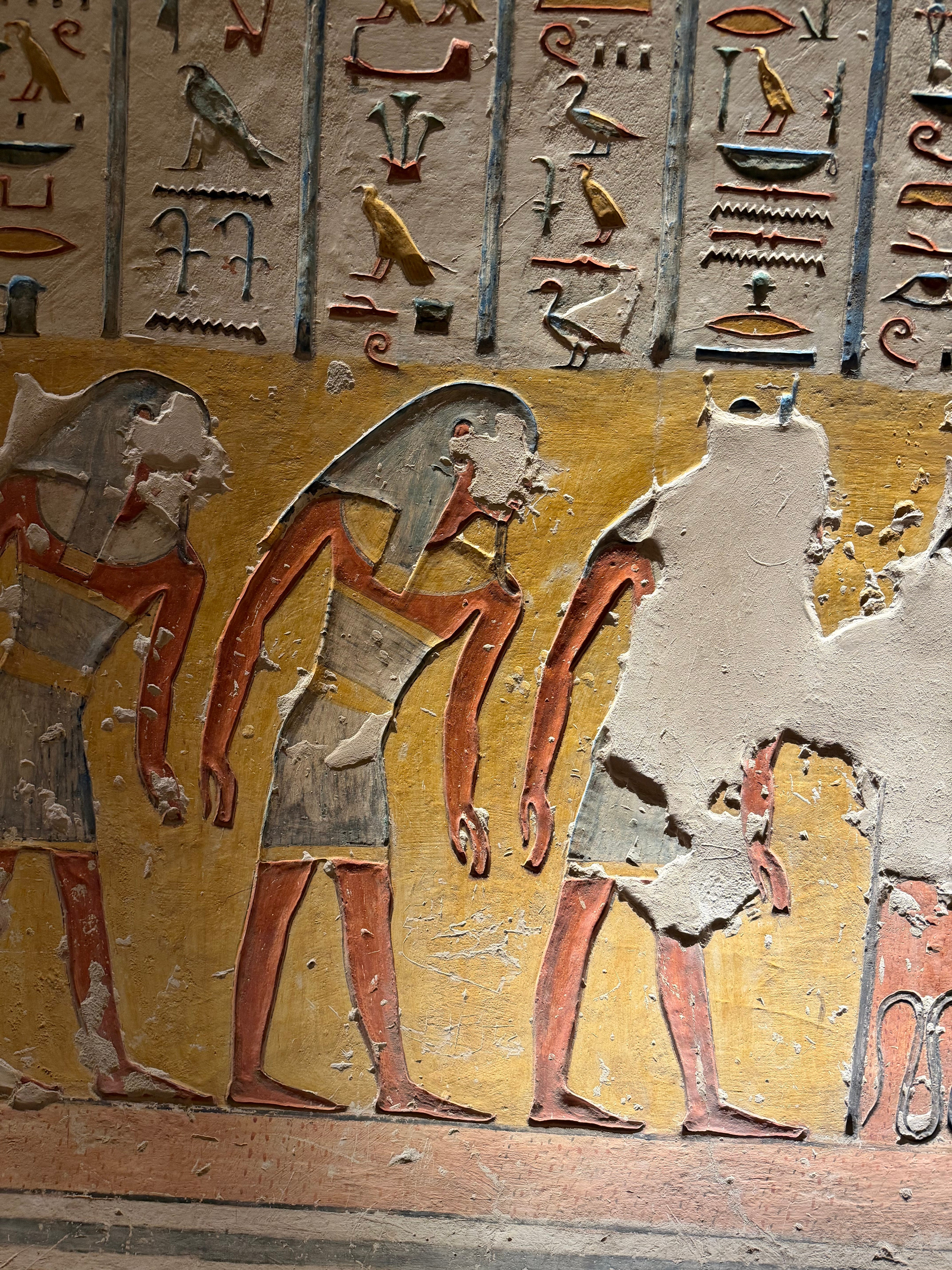
Imagery that we saw in temple after temple was the left leg forward because it is the same side as the heart. It means that the Pharaoh is leading with strength. A seated Pharaoh means peace and stability. A closed fist means power and an open hand resting on the thigh means peace.
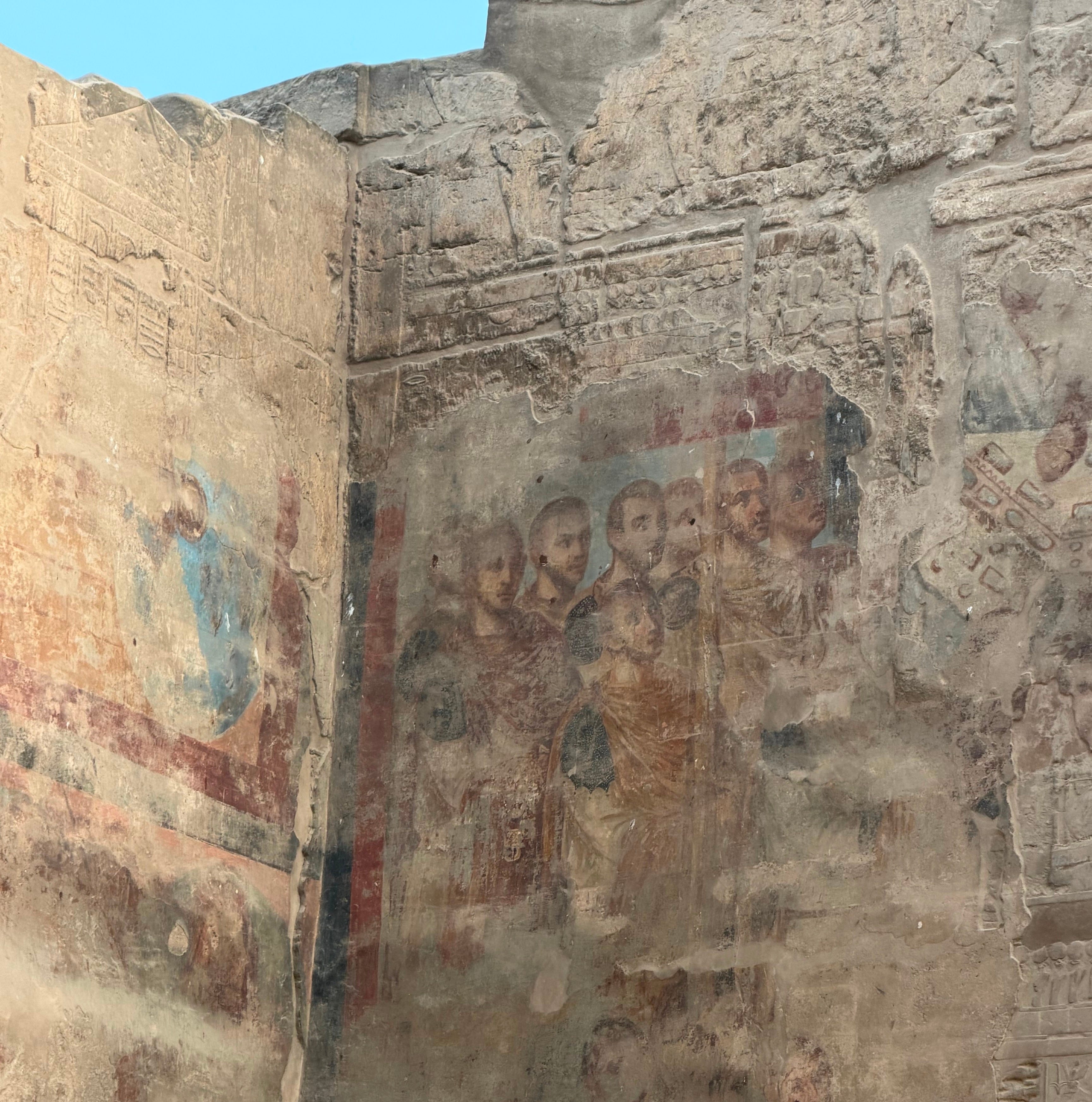
It was interesting visiting temples to see where Christians had painted over some of the temple images.
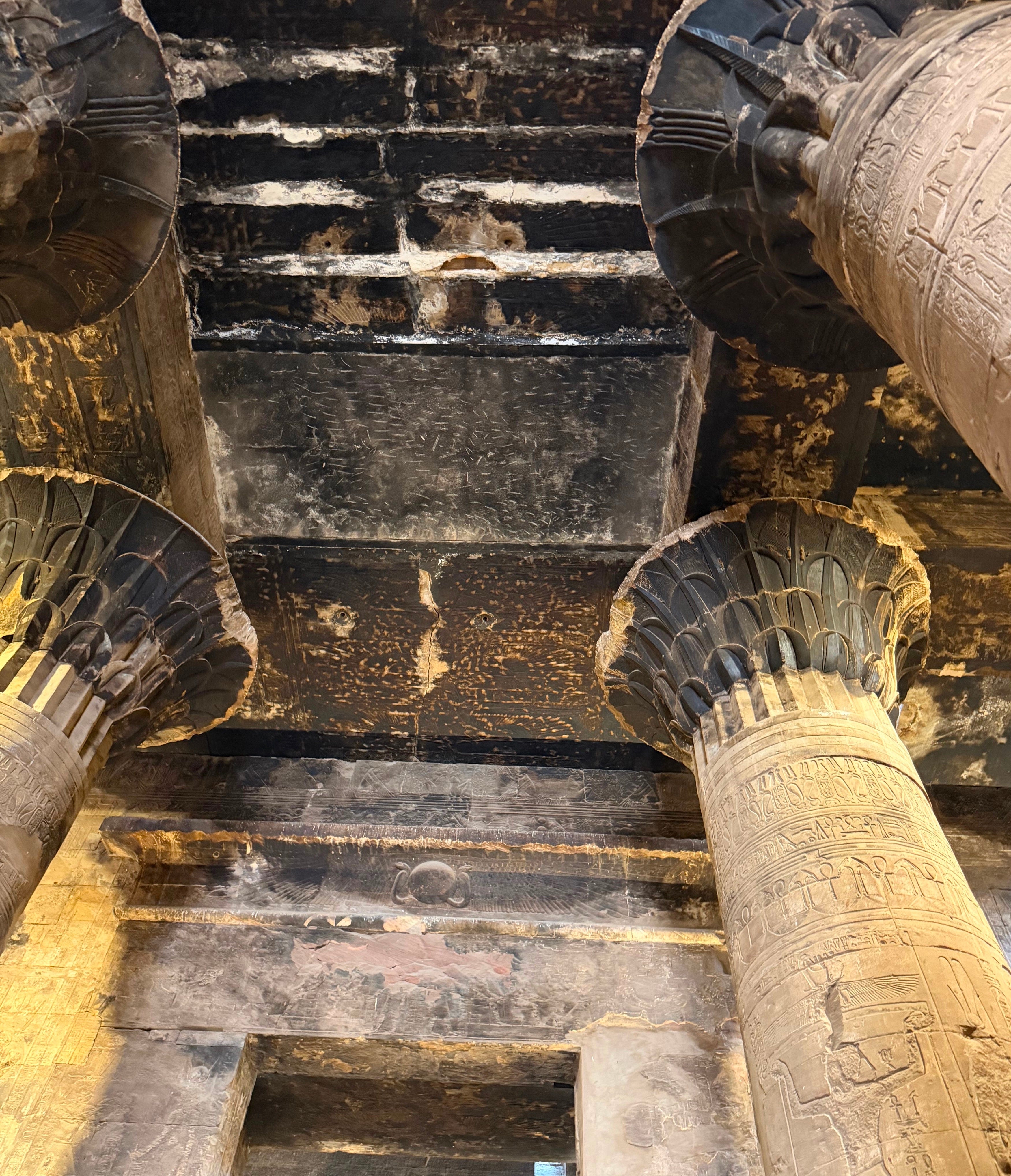
Or to see the soot on the ceiling from Christians burning incense.
Or later Muslims had built a mosque that was still being used.
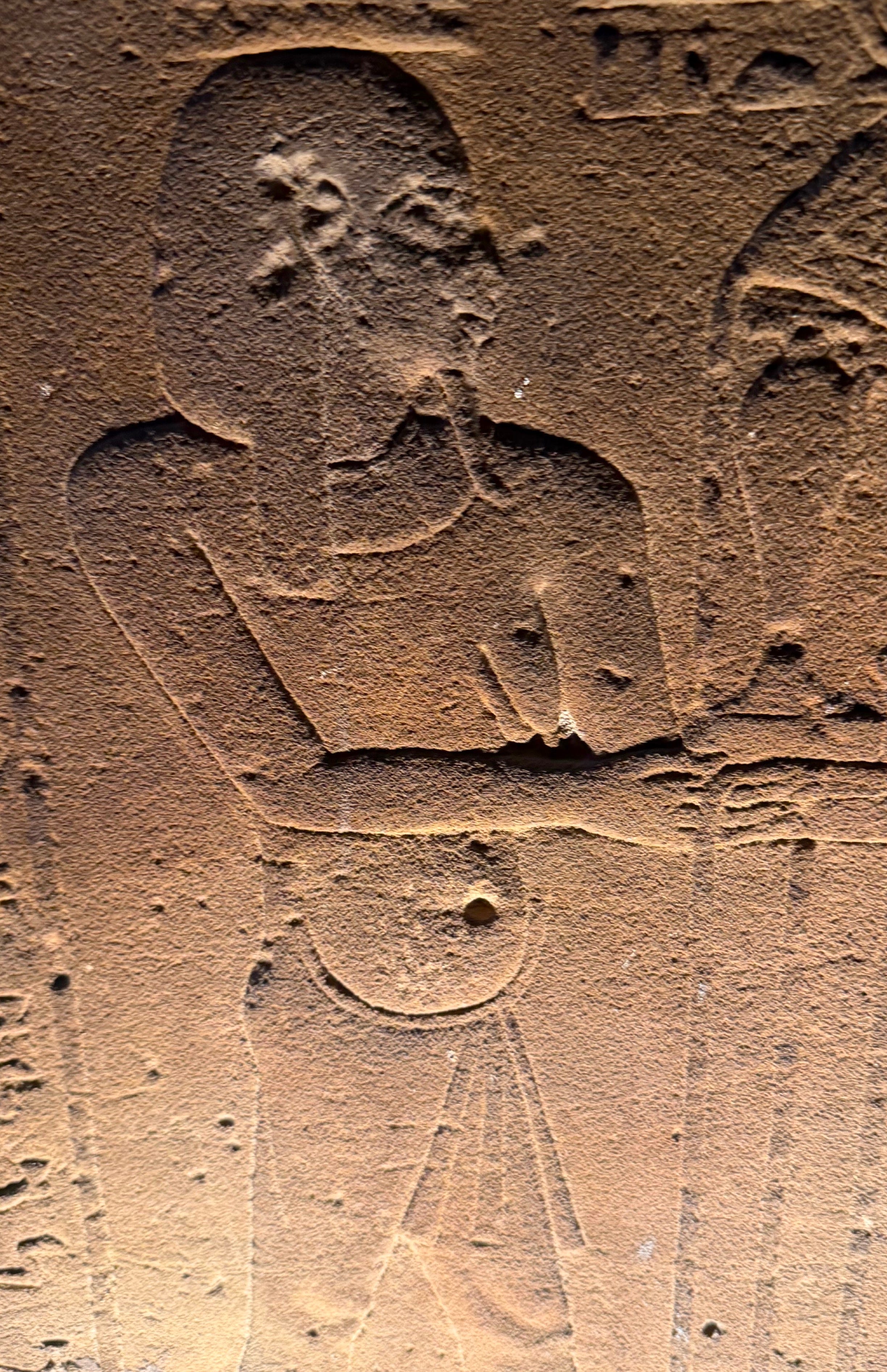
One of the images that I loved the most was the God of the Nile who has a big belly because he drank so much water.
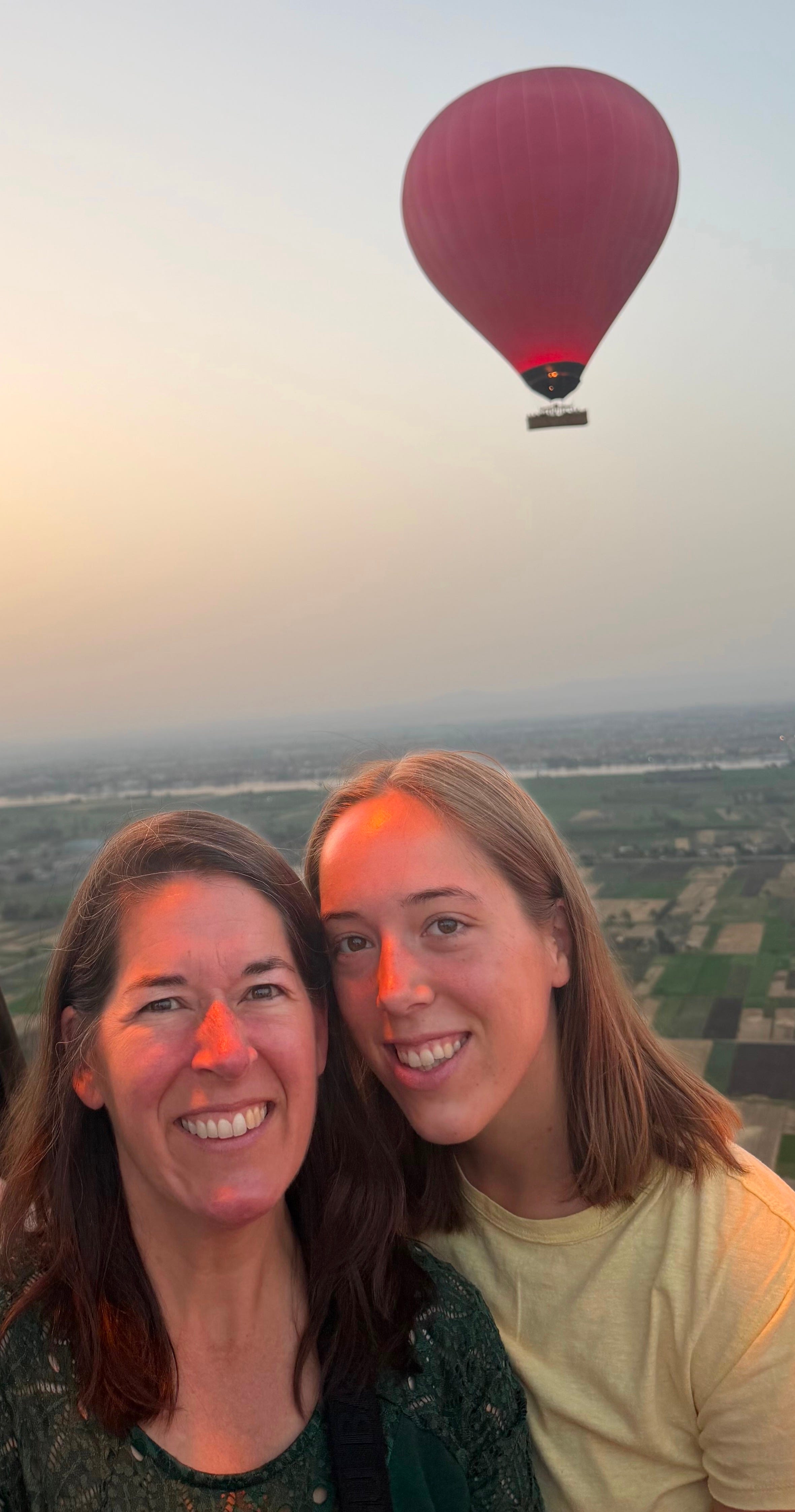
Madeleine and I were fortunate enough to be able to ride a hot air balloon over the Valley of the Kings at sunrise. 32 people were in our hot air balloon, 4 people in each compartment. There are 63 Pharaohs buried in the Valley of the Kings.
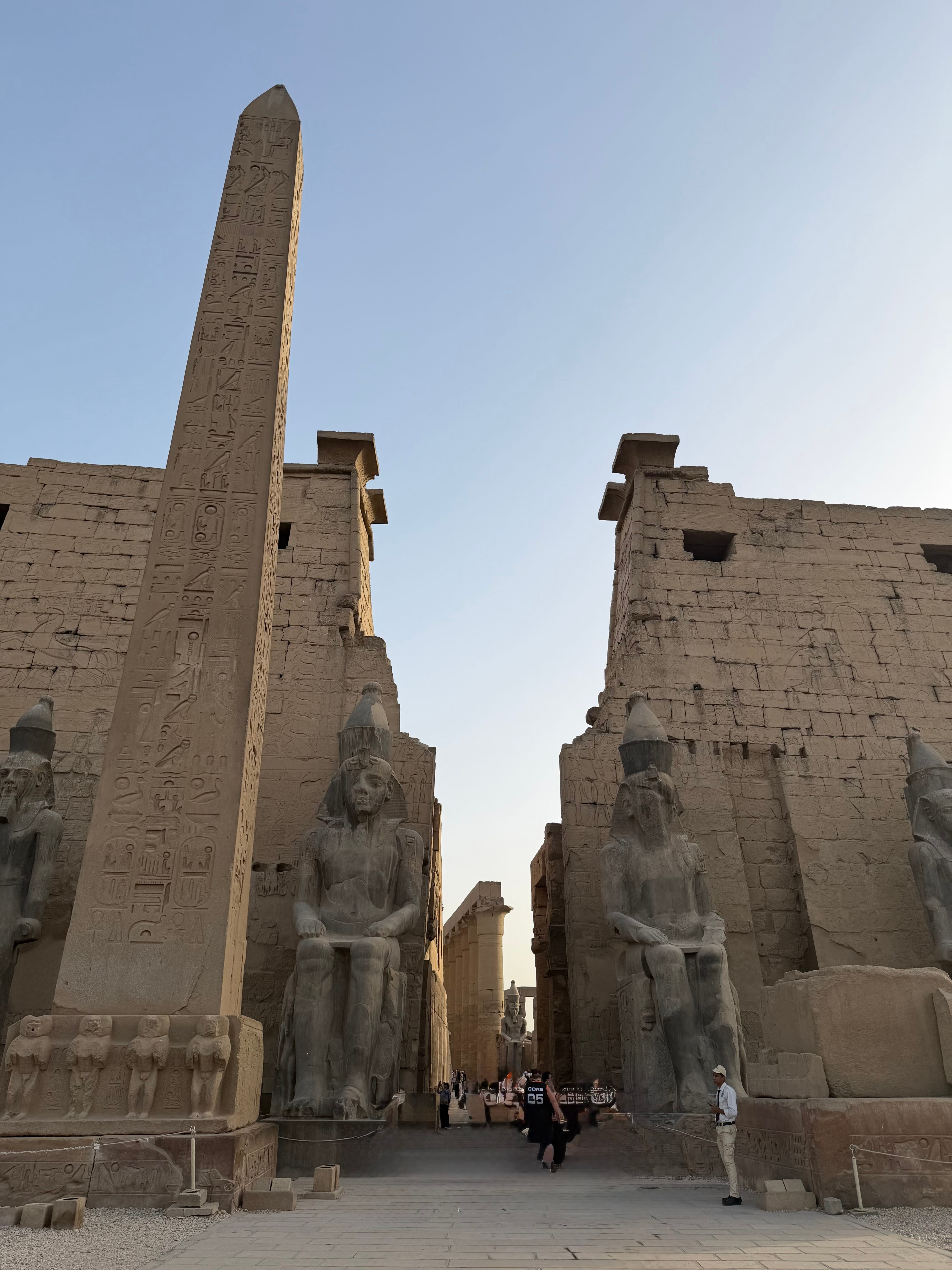
Luxor Temple had two obelisks at its entrance but in the 1830s the one on the right side was gifted to France and moved to the Place de la Concorde in Paris.
The Edfu Temple (temple of the falcon god) was the most well-preserved temple because mud walls were built around it to keep it safe during flood season.
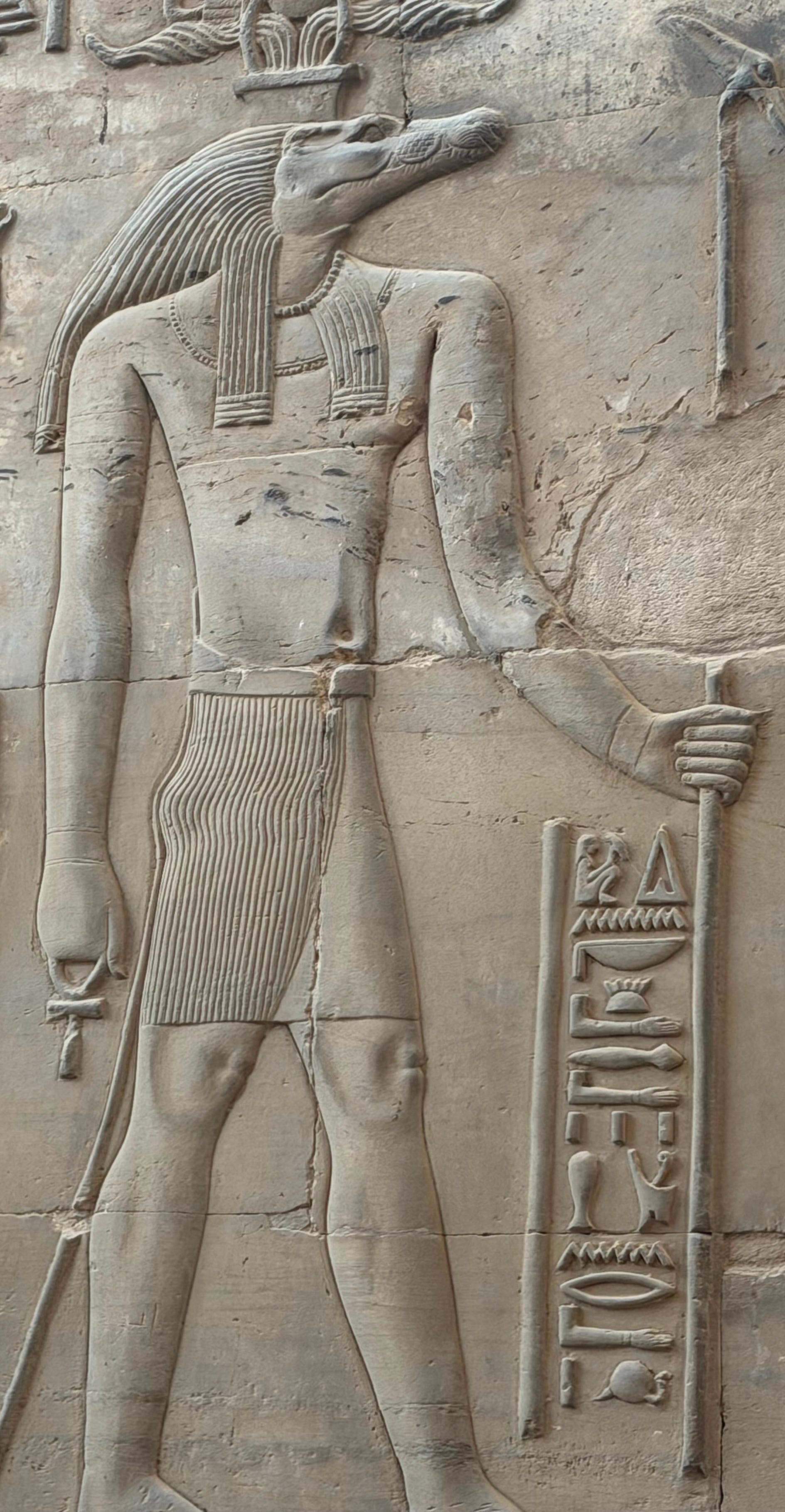
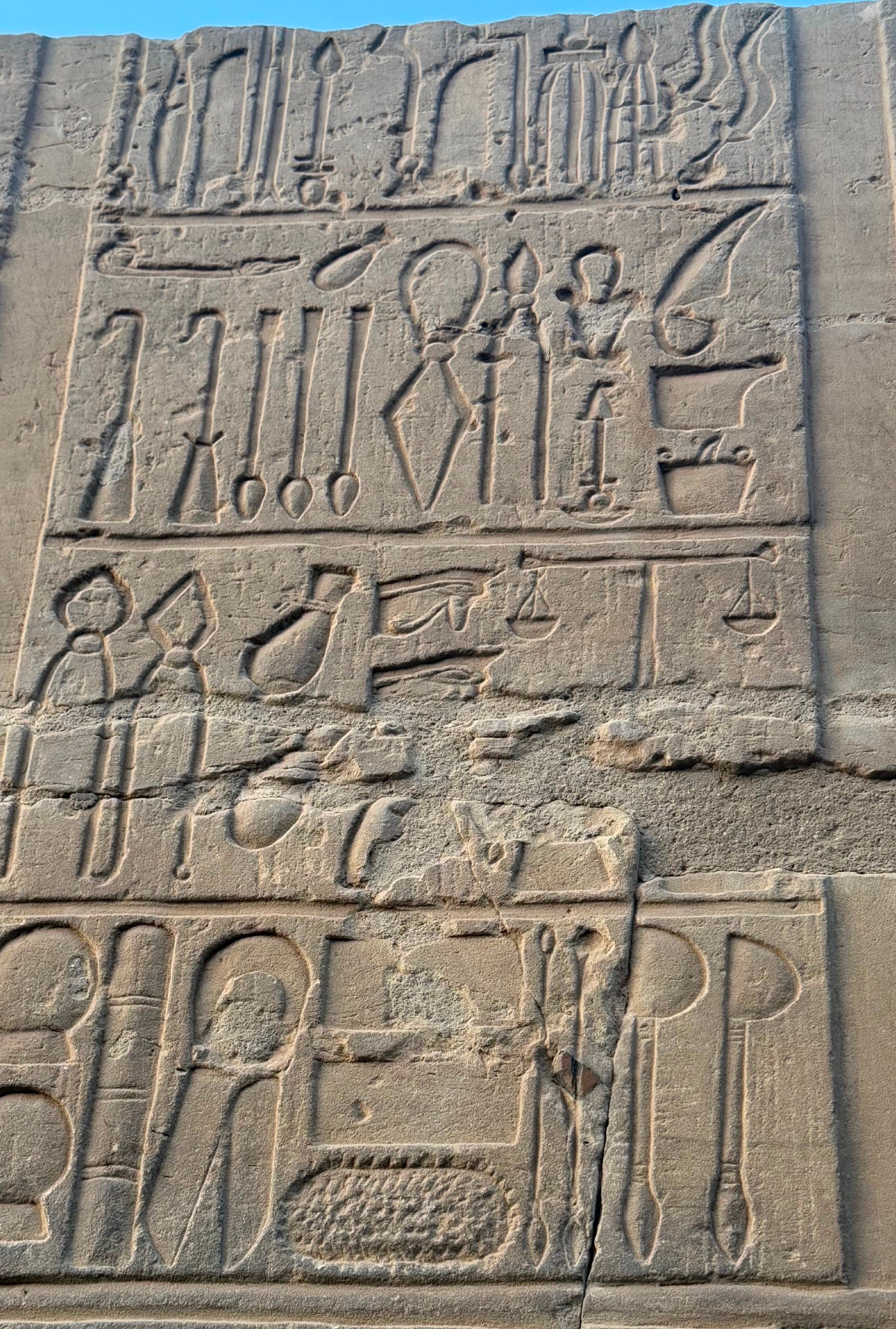
Kom Ombo Temple is the only temple for two gods (Sobek the crocodile god of fertility and Horus the falcon god of sky, war, and pharoahs) so it is the only temple with two entrances. Kom Ombo Temple also has ancient Egyptian calendar, a 365 days solar calendar with three seasons (growing, harvest, flood) and four 30-day months per seasons followed by five extra days, also known as the birthdays of the gods.
There was also a depiction of the tools used for mummification.
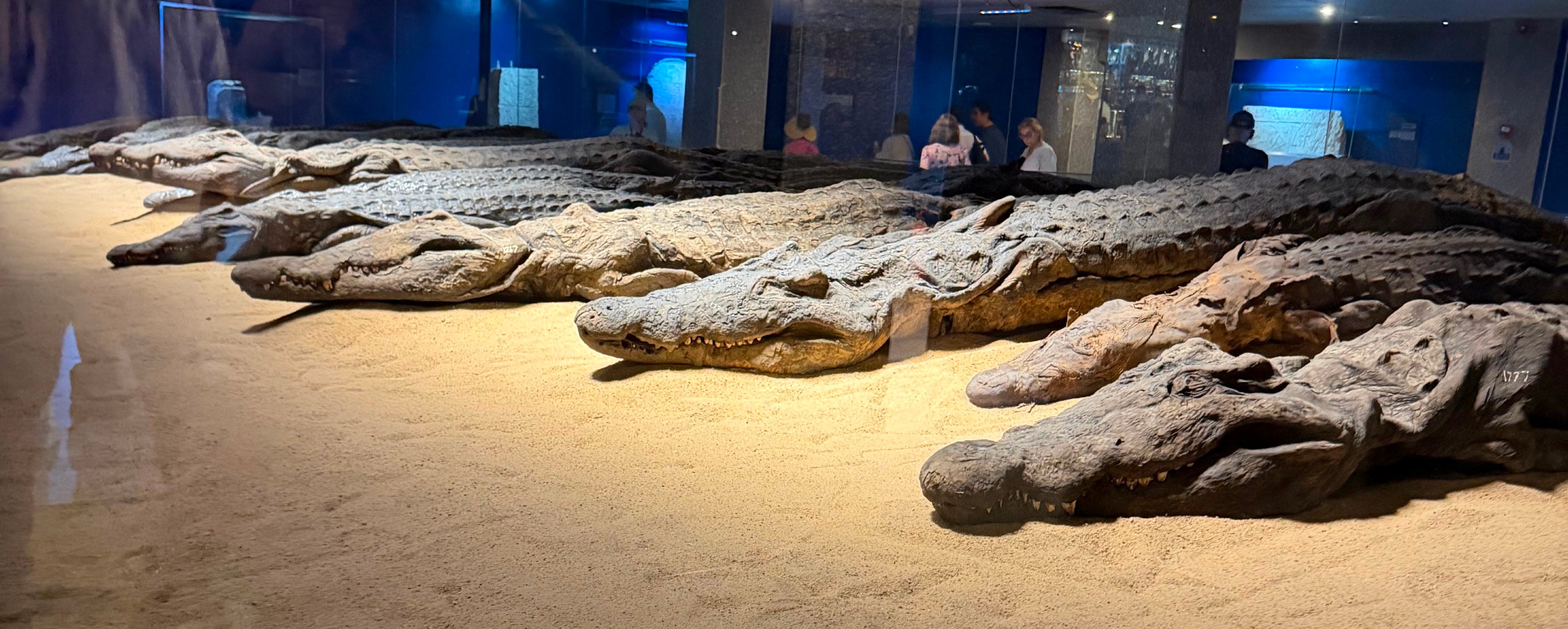
Afterwards, we went to a crocodile mummification museum. Crocodiles were mummified to honor Sobek, the crocodile god of fertility.
My favorite Pharaoh was Queen Hatshepsut. When her husband died, she ruled as regent to her stepson who inherited the thrown at the age of two. Several years into her reign, Hatshepsut assumed the position of Pharaoh and began to be depicted as a male Pharaoh wearing a false beard and male regalia to command authority in a patriarchal society. Hatshepsut said she was not a woman but she never said she was a man. Pharaoh Hatshepsut ruled for over two decades and it was a peaceful time.
Abu Simbel was the most impressive Temple that we saw. The statues at Abu Simbel were covered by sand up to their knees until the lore says a local Nubian boy named Abu Simbel acting as a guide for a Swiss explorer discovered the buried temple complex in 1813.
There are four 66 feet carvings out of the mountainside of Pharaoh Ramesses II and a smaller structure dedicated to his wife Nefertari with statues of Ramesses and Nefertari where Nefertari is counter-culturally the same height as Ramesses II. He had 50 wives but Nefertari was his favorite.
From 1964-1968, 25,000 workers cut the statues and temples into pieces, and lifted them 200 meters higher on an artificial hill because the entire complex was under threat of flooding because of the construction of the Aswan High Dam.
Abu Simbel temple was built between 1264-1244 BCE and is over 3,200 years old. Twice a year the sun shines into the inner sanctuary of the temple.
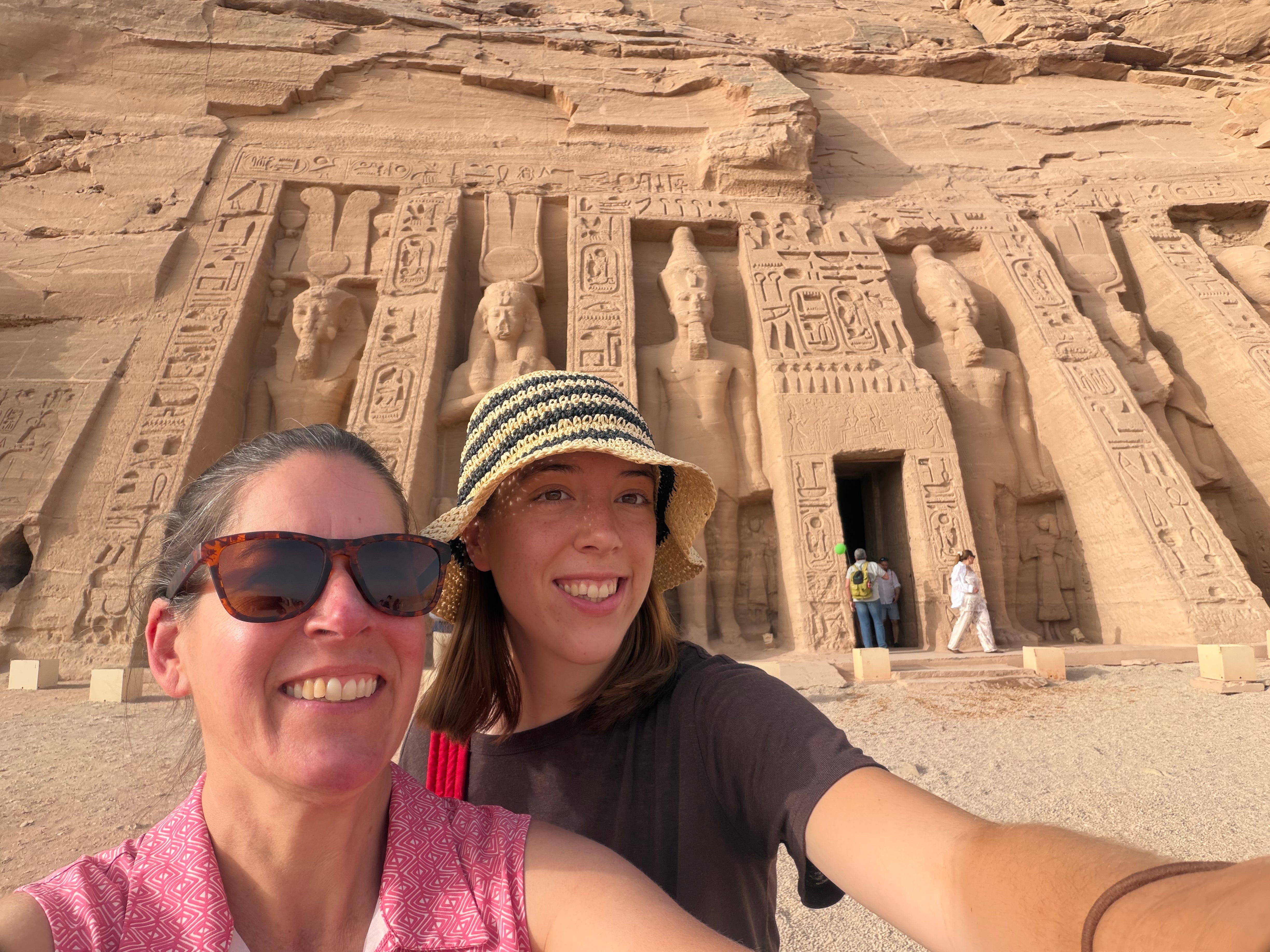
Going to Egypt was amazing. To see the details in the hieroglyphics and then to think about how old all of these structures were was mind-boggling. To be able to go with my amazing daughter made it all the better.